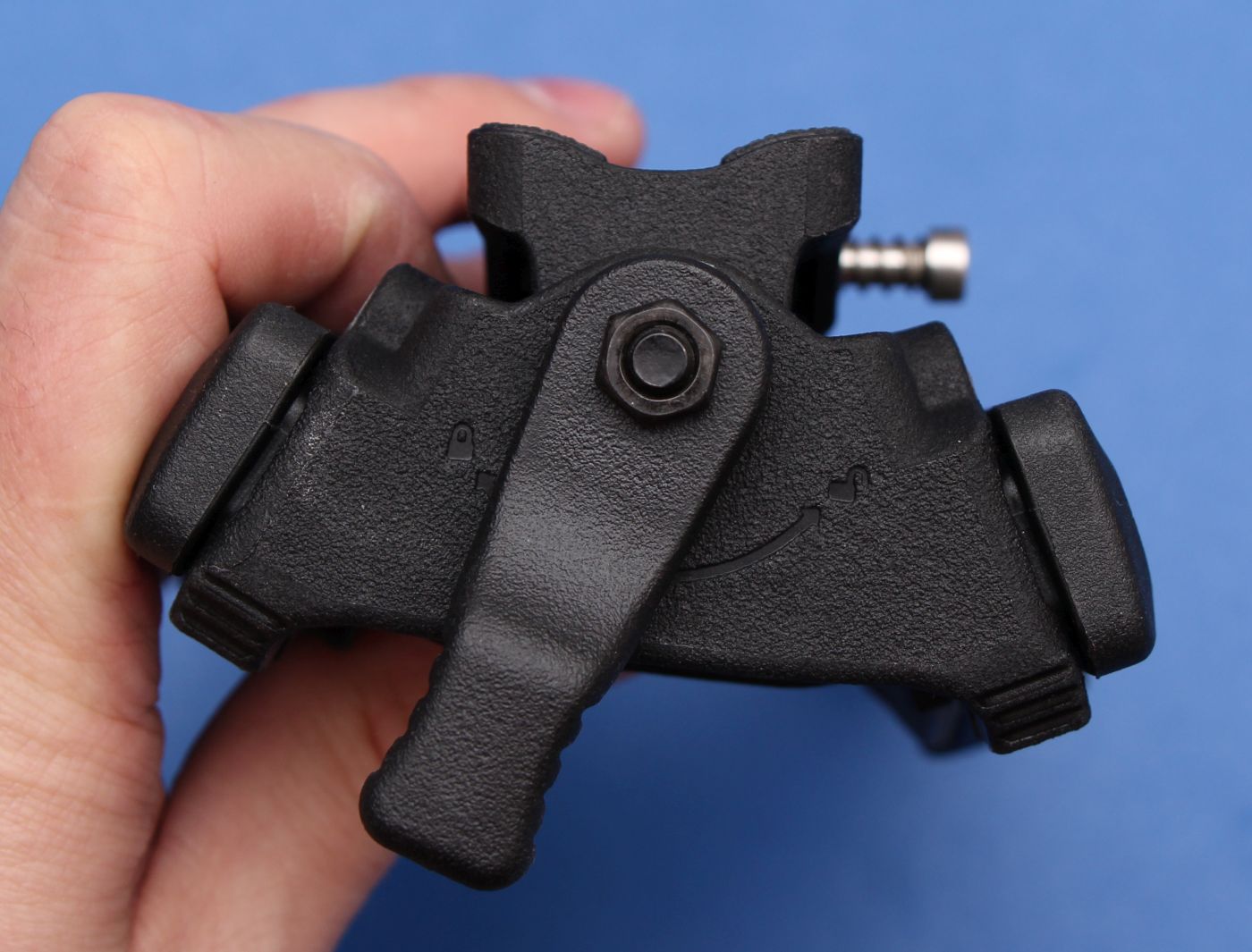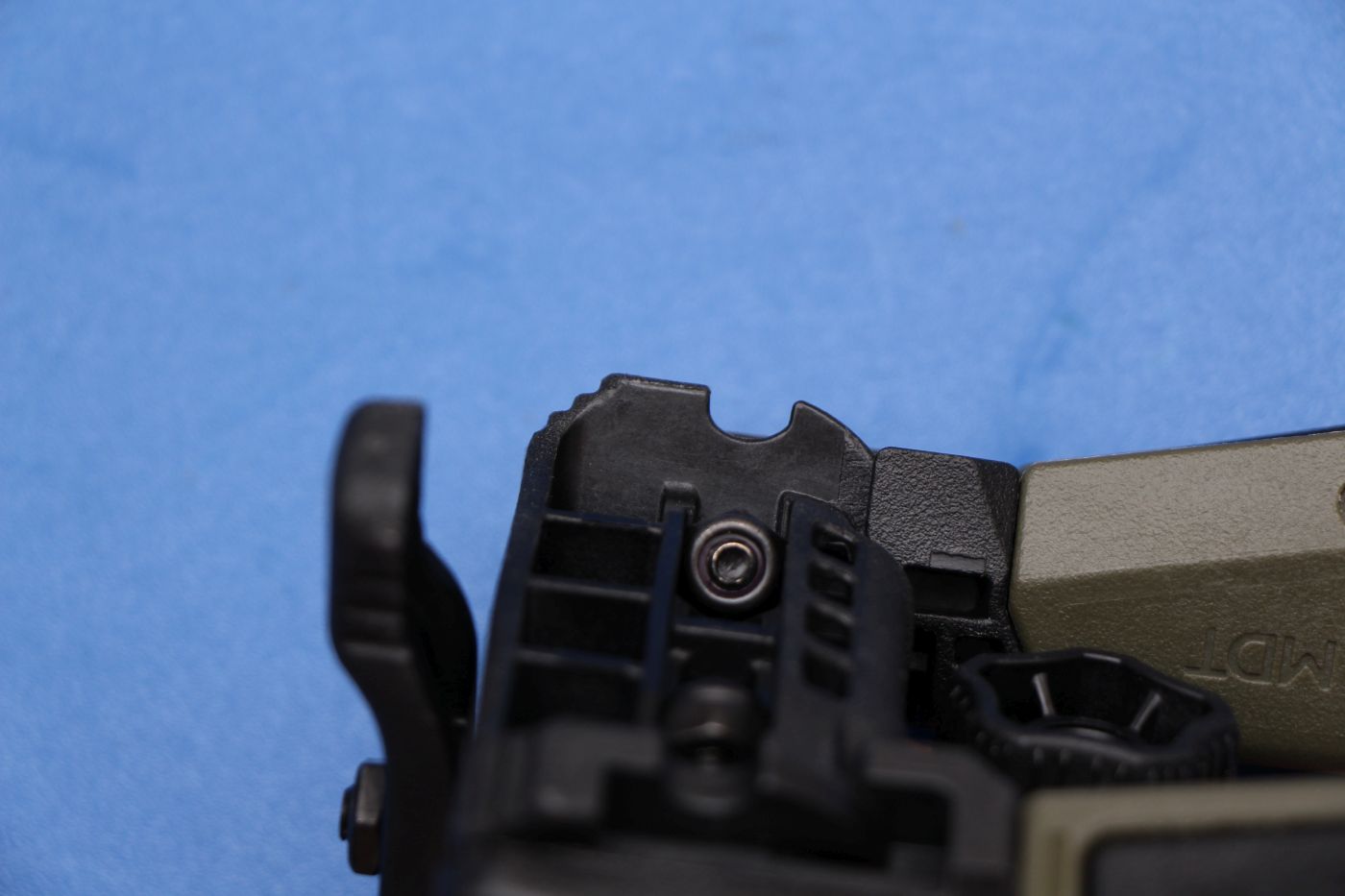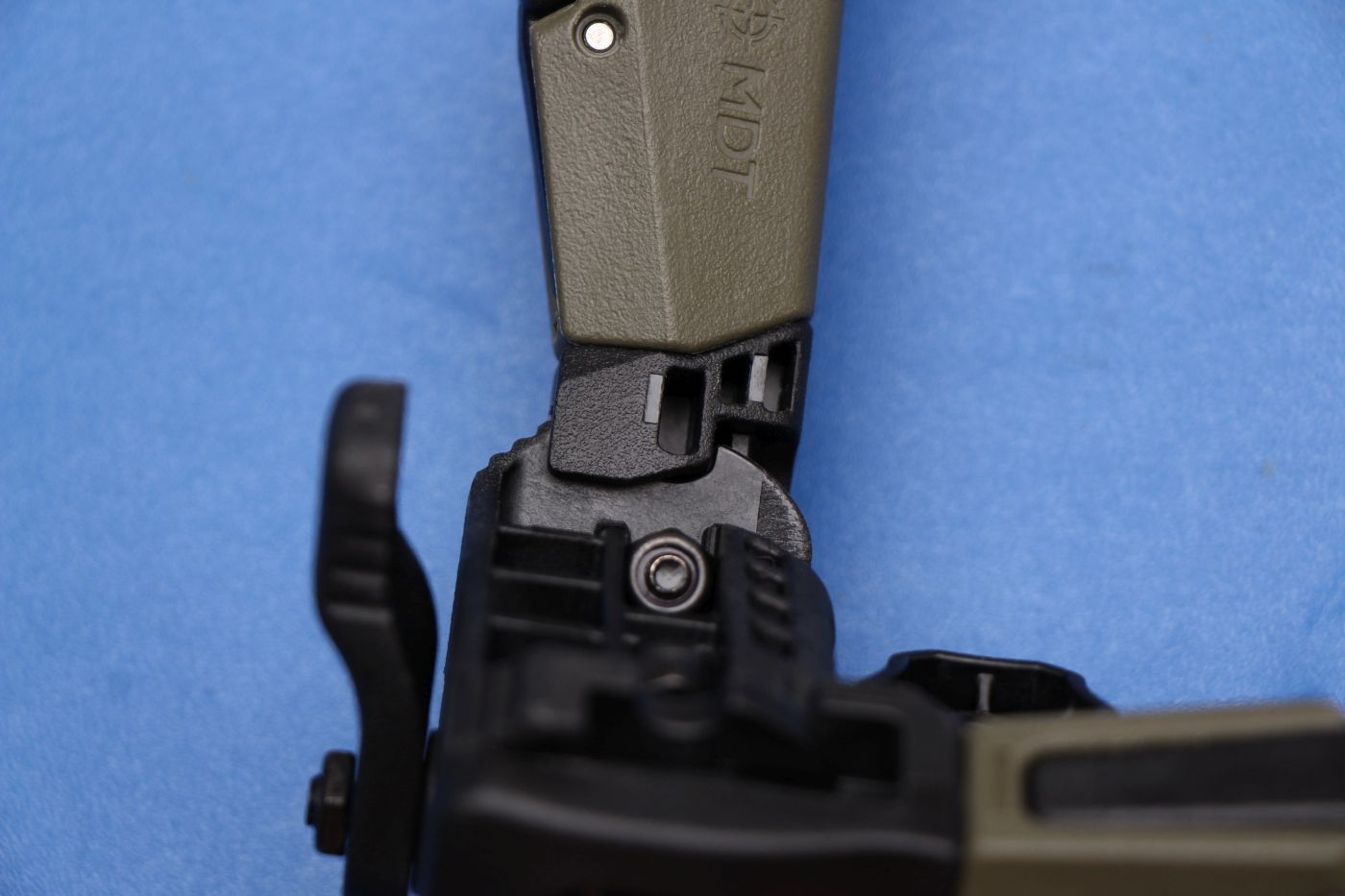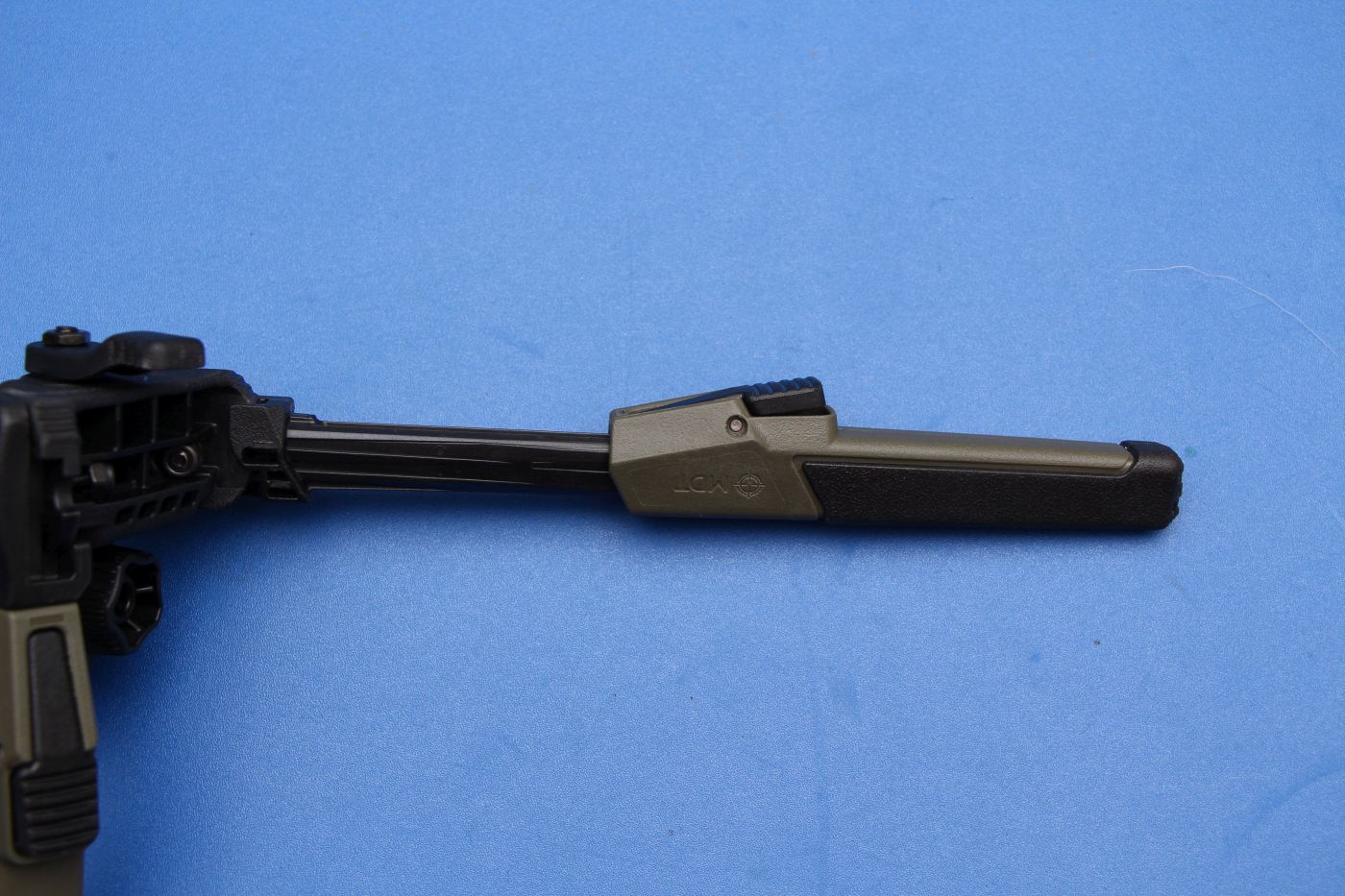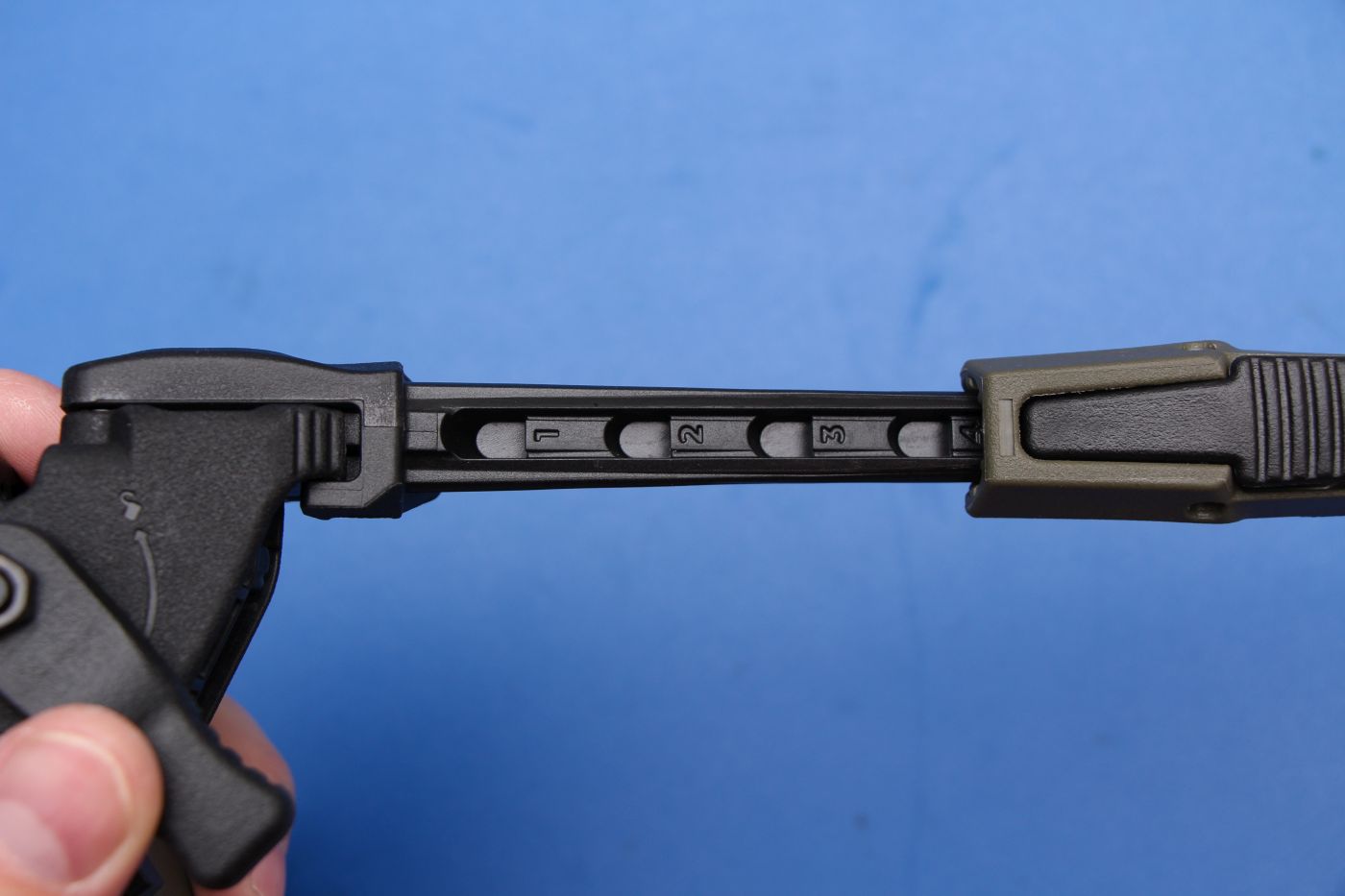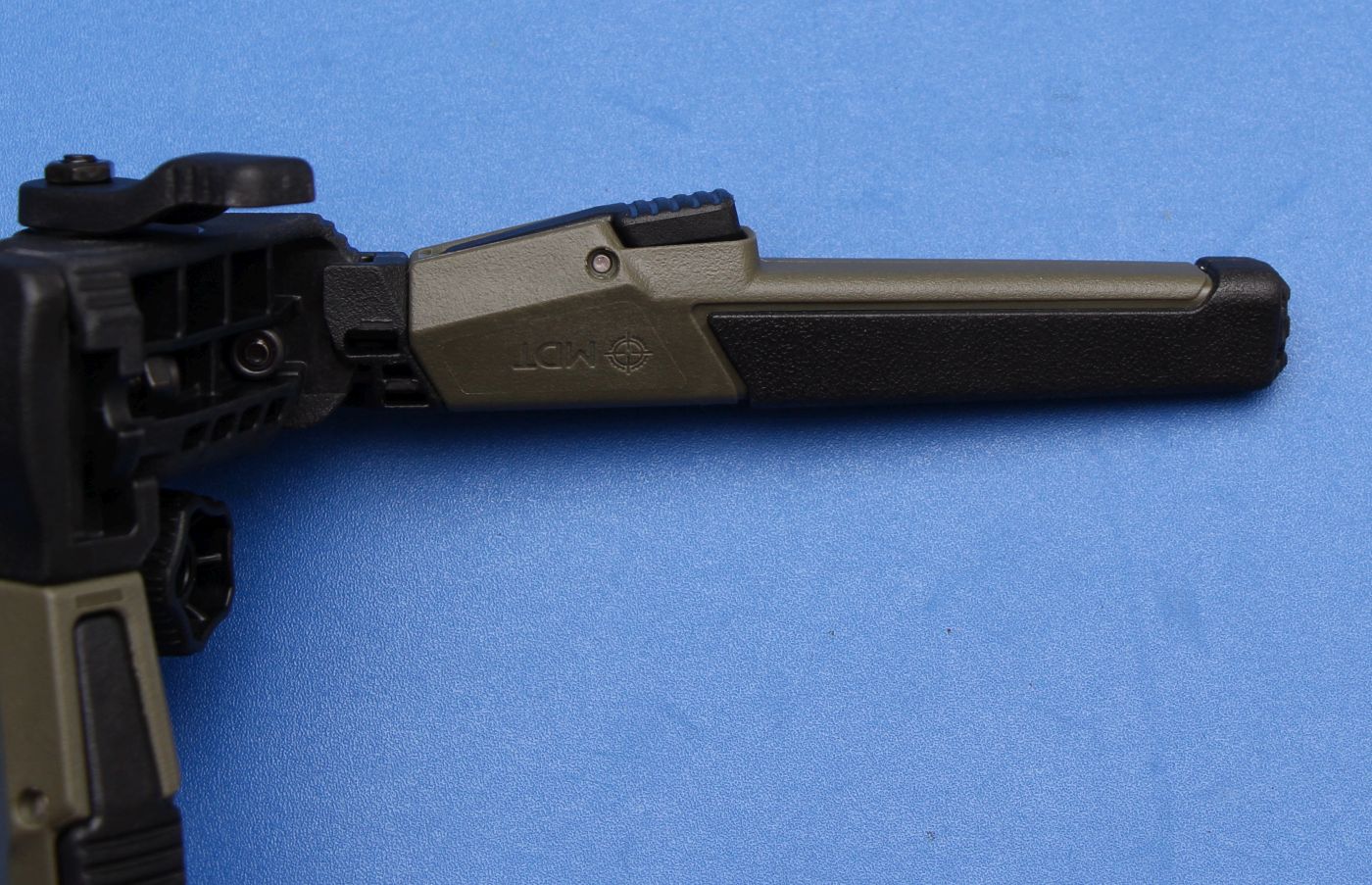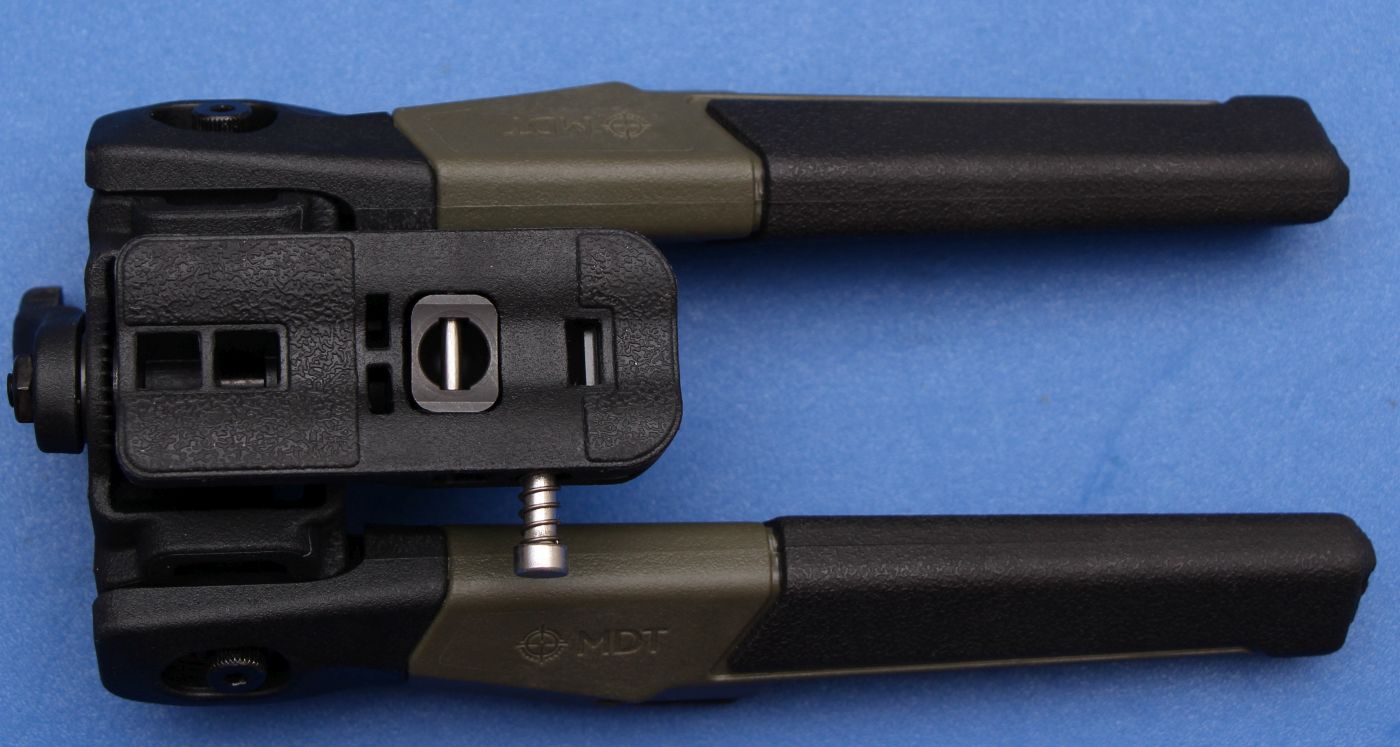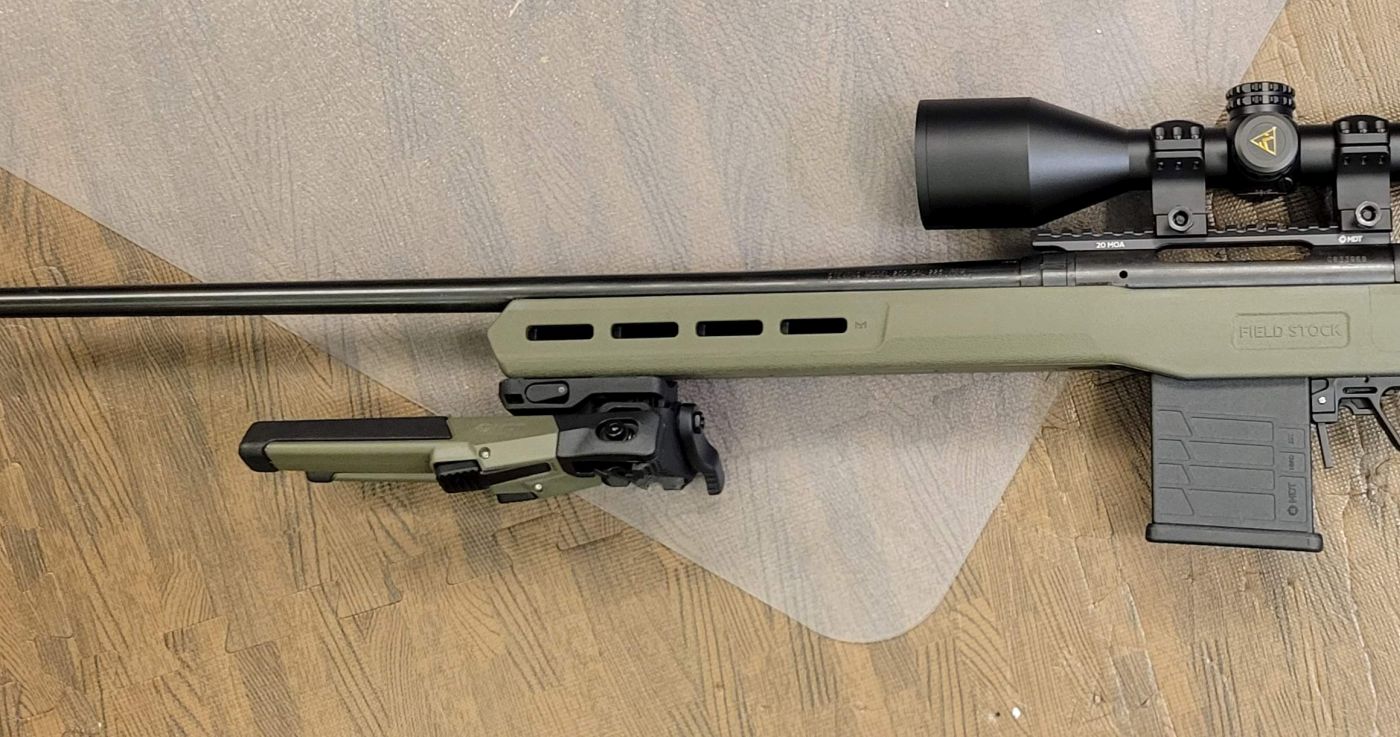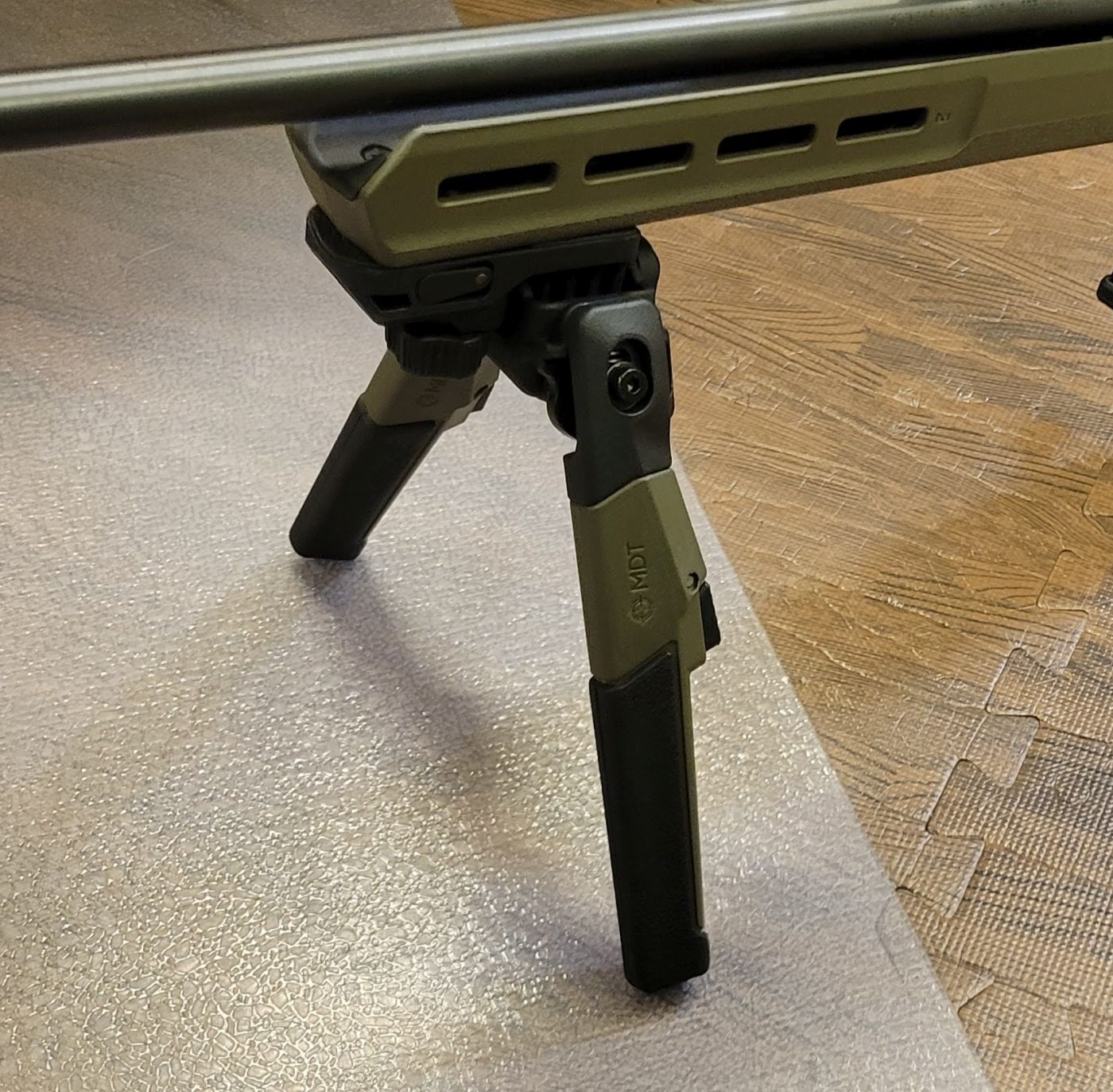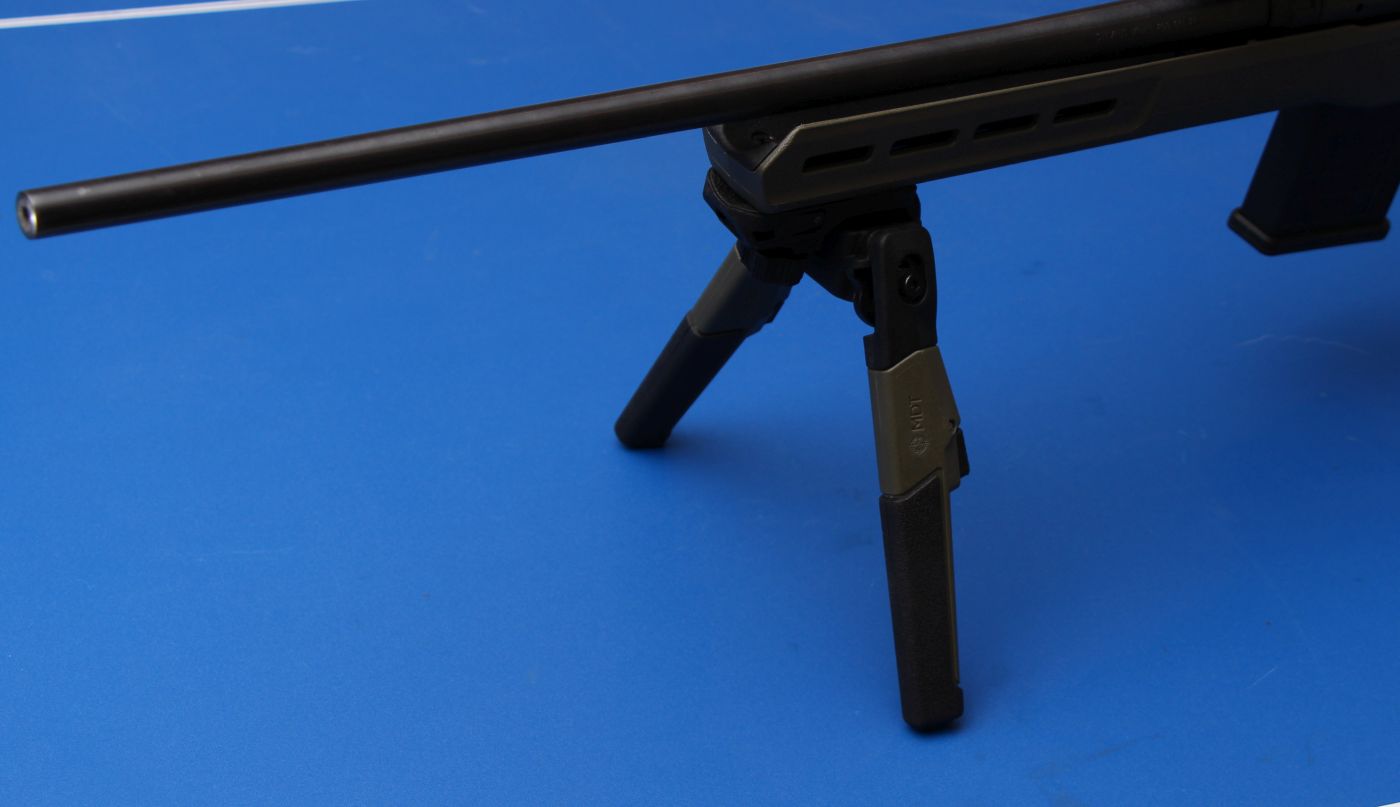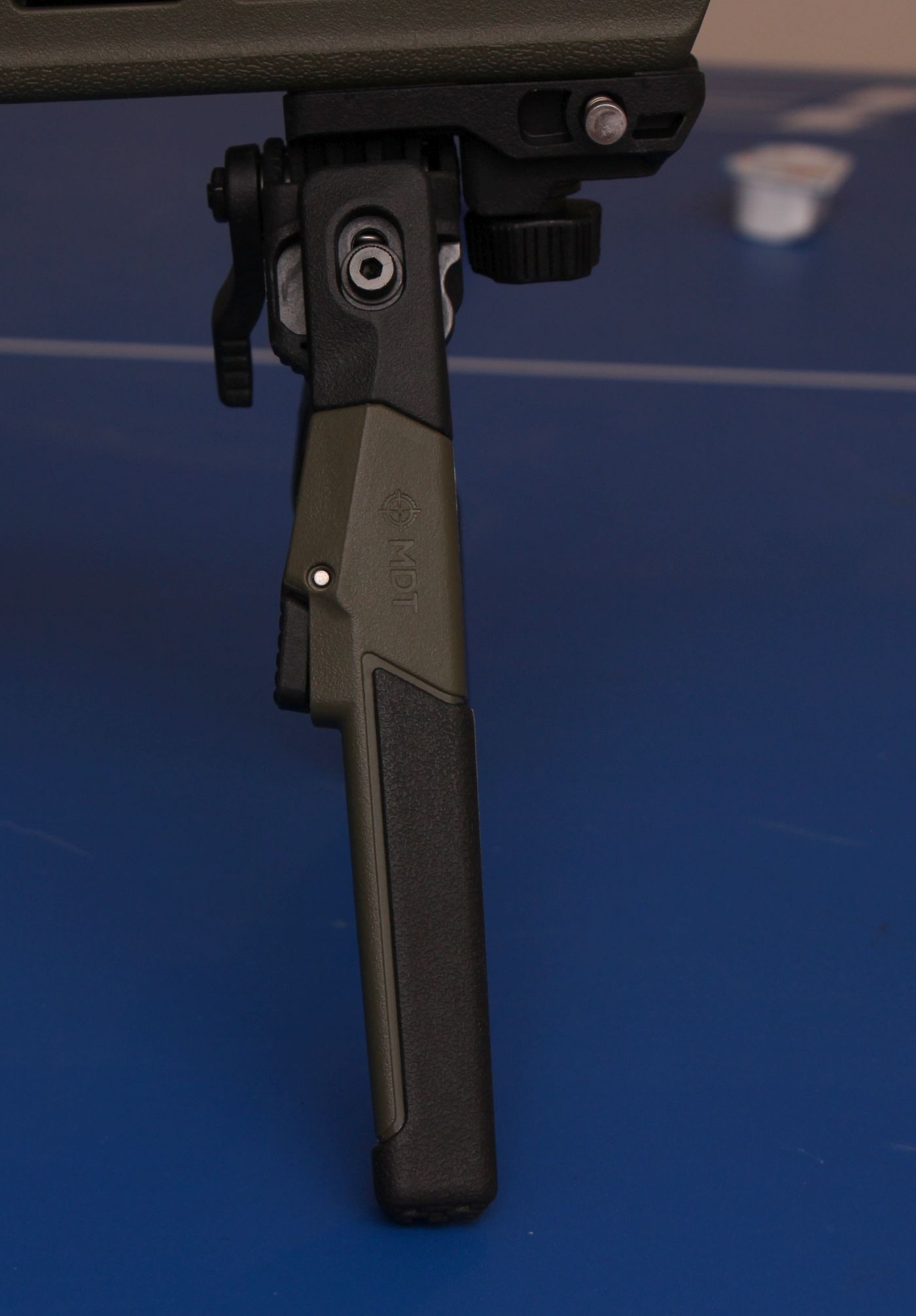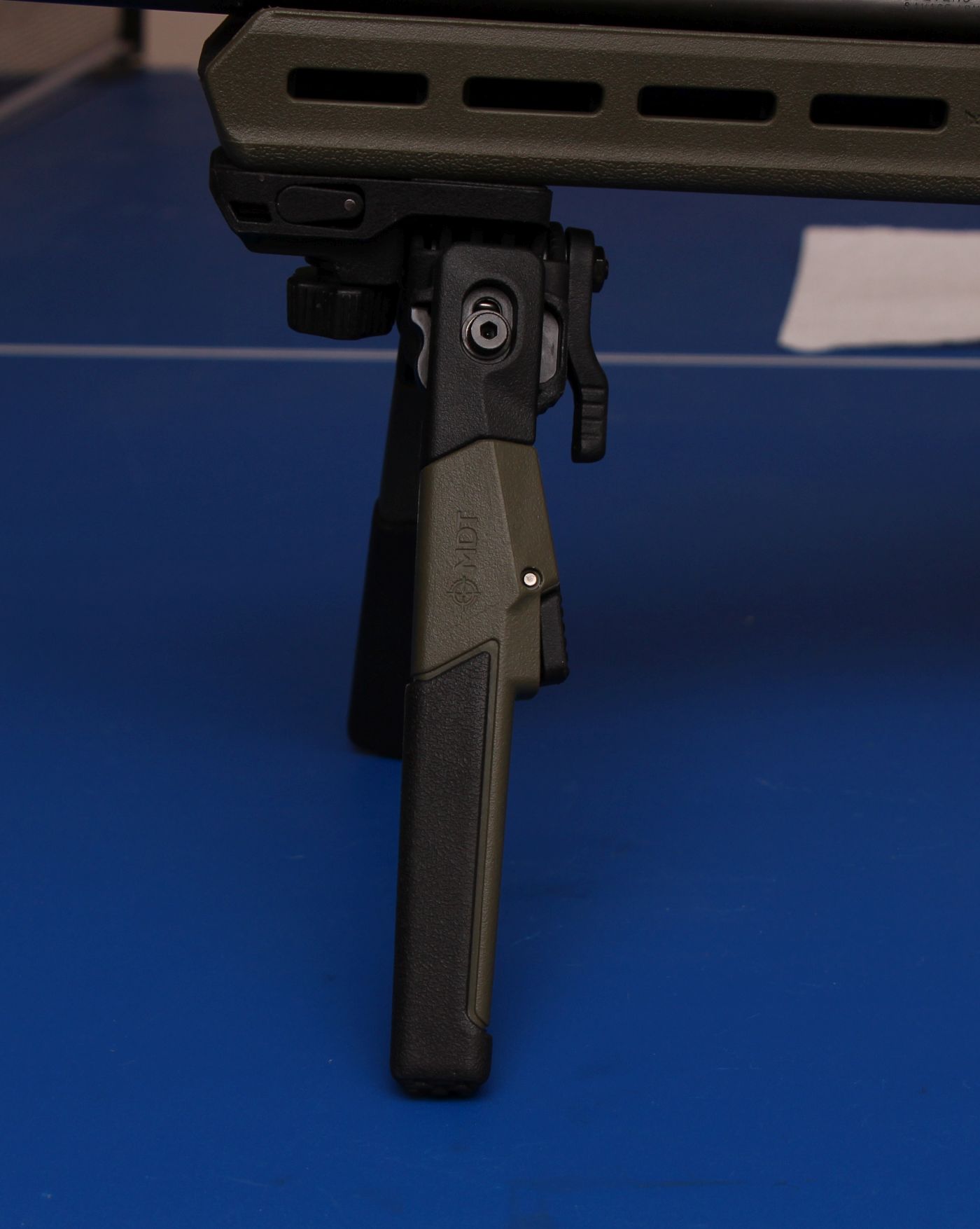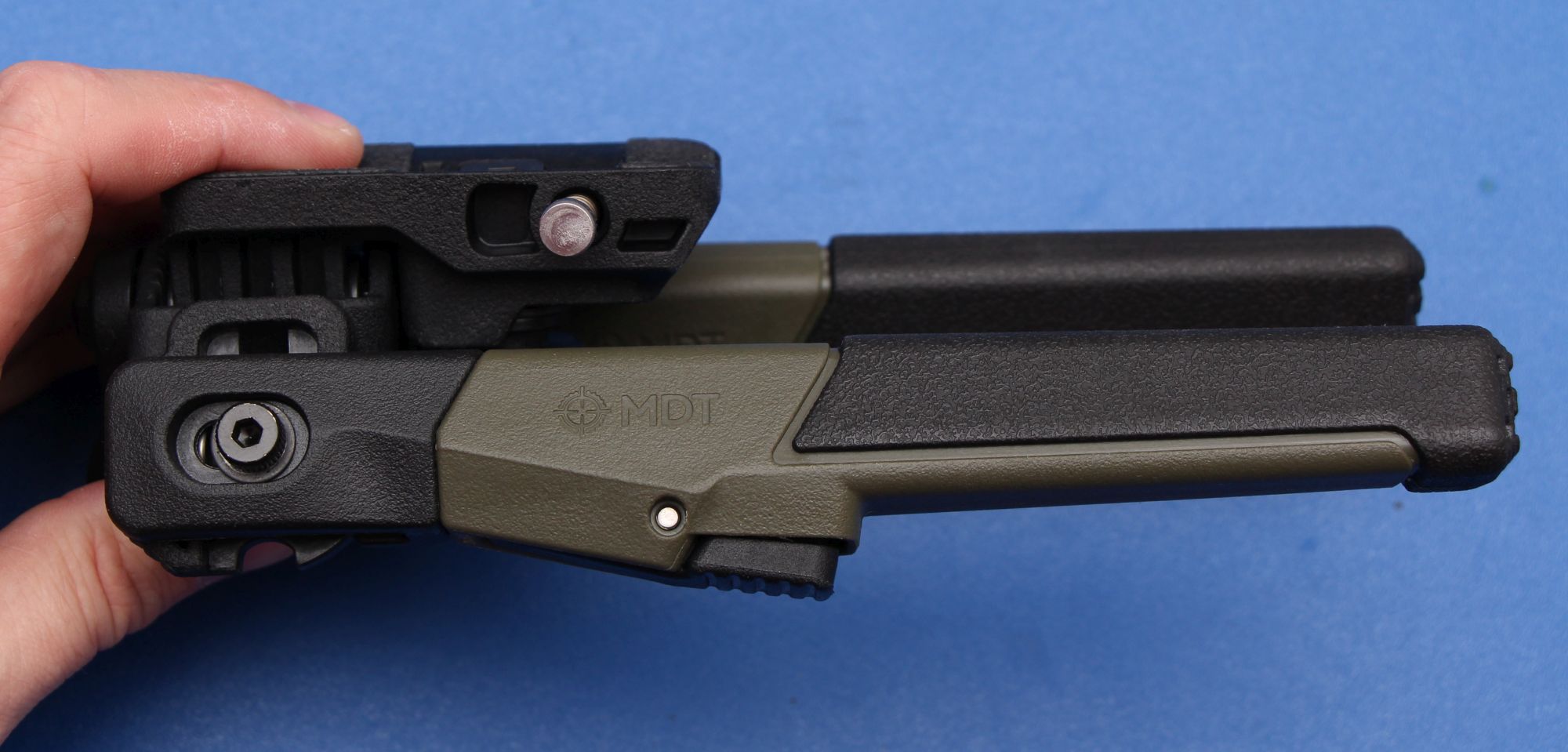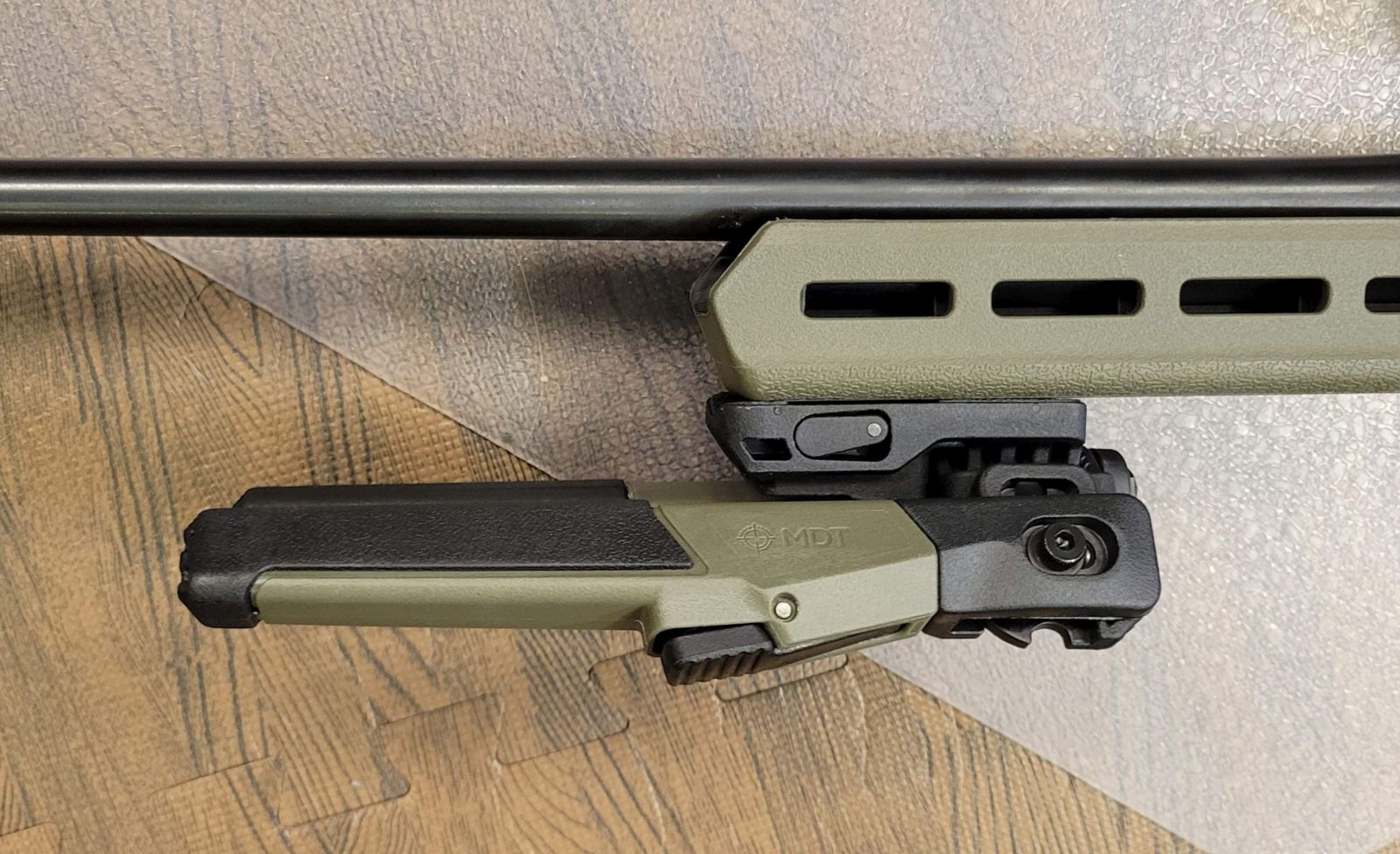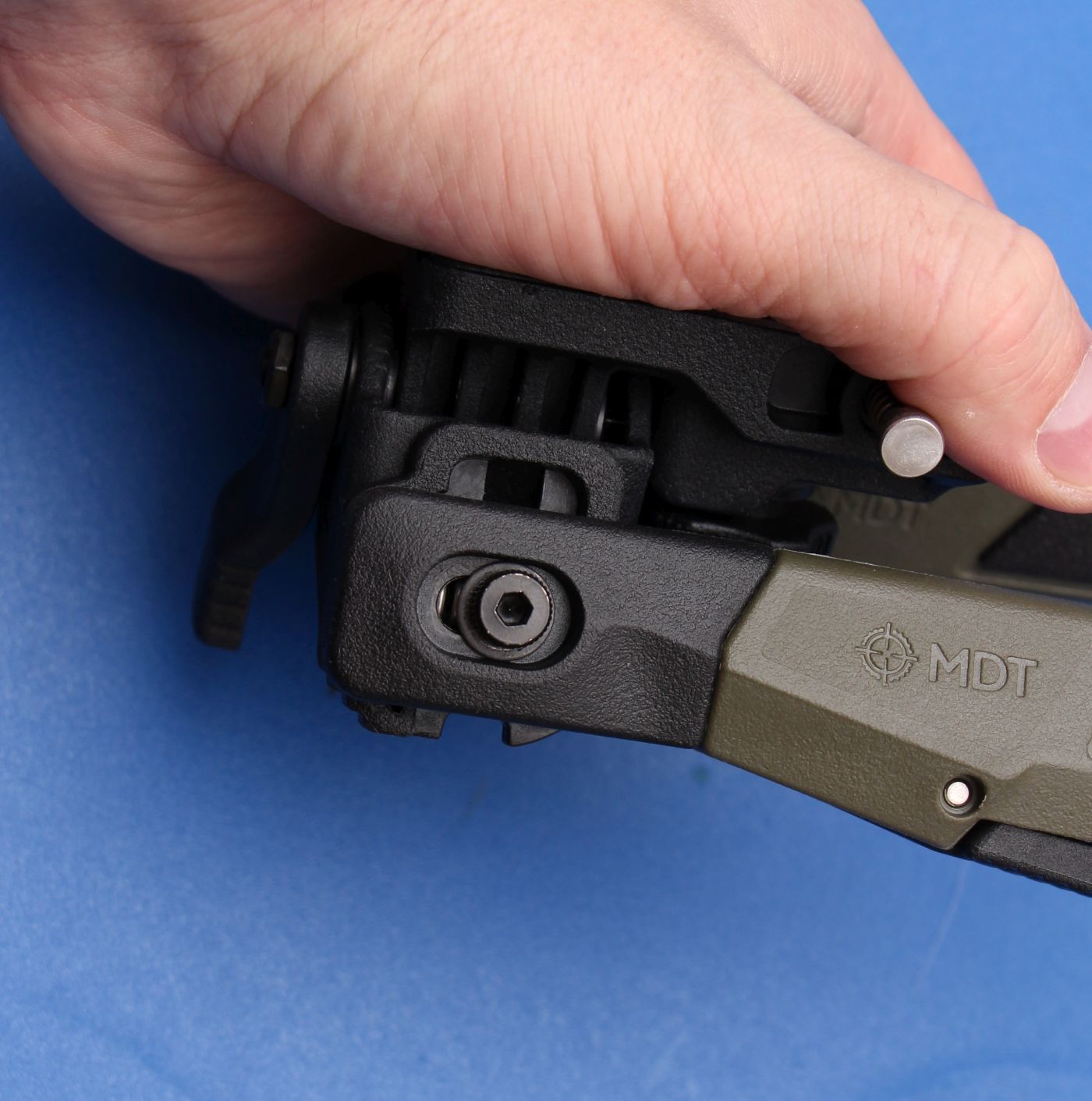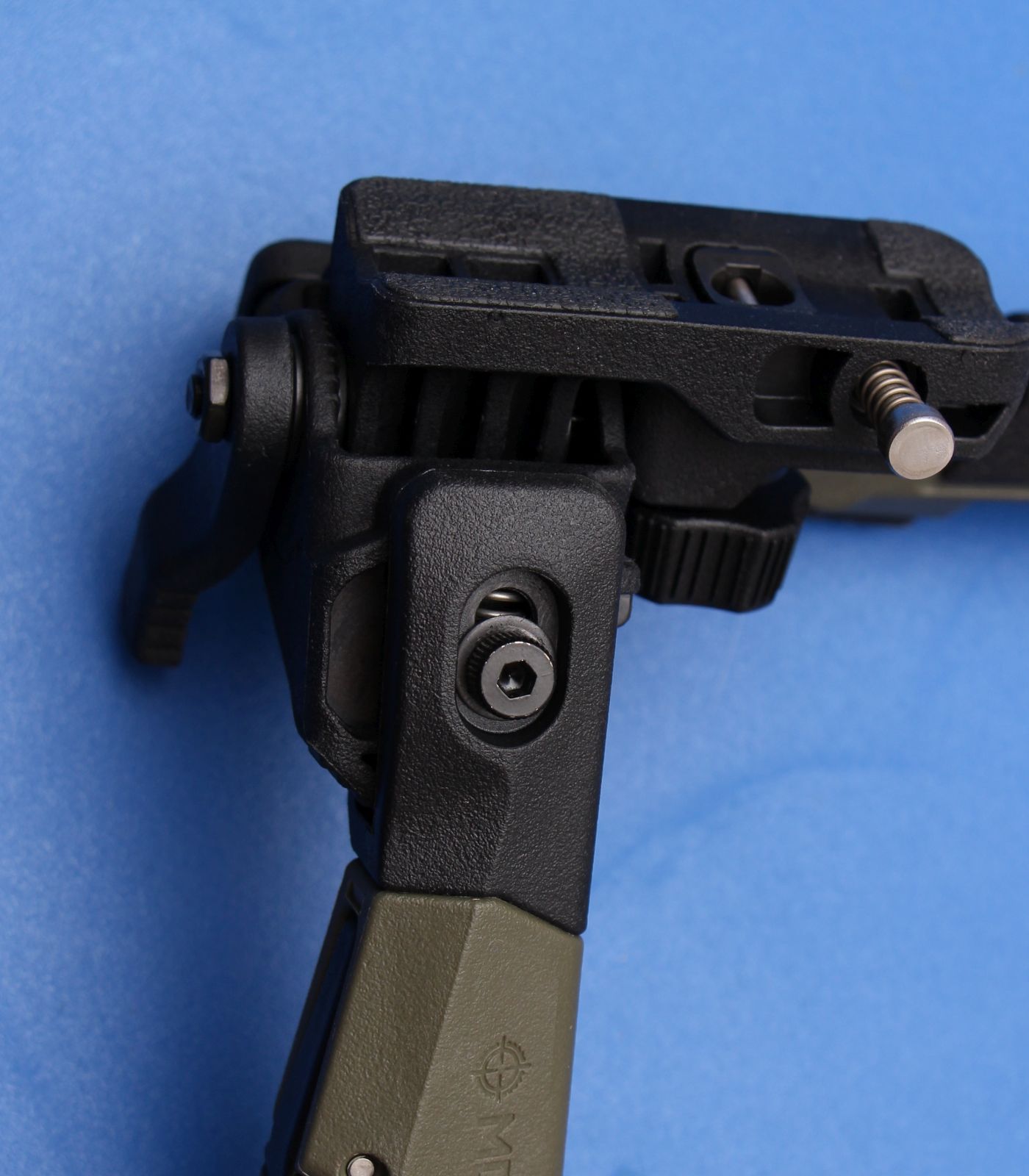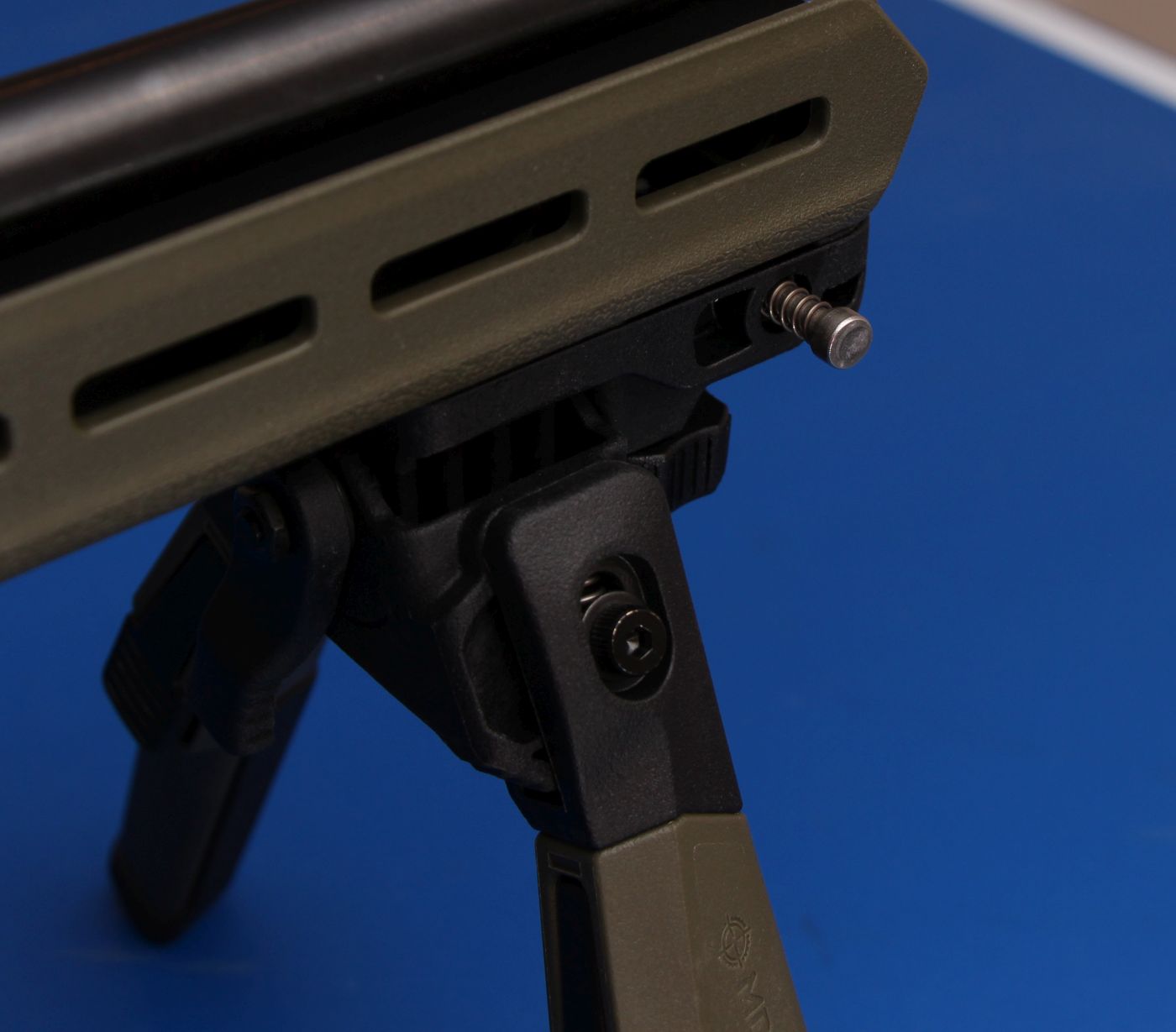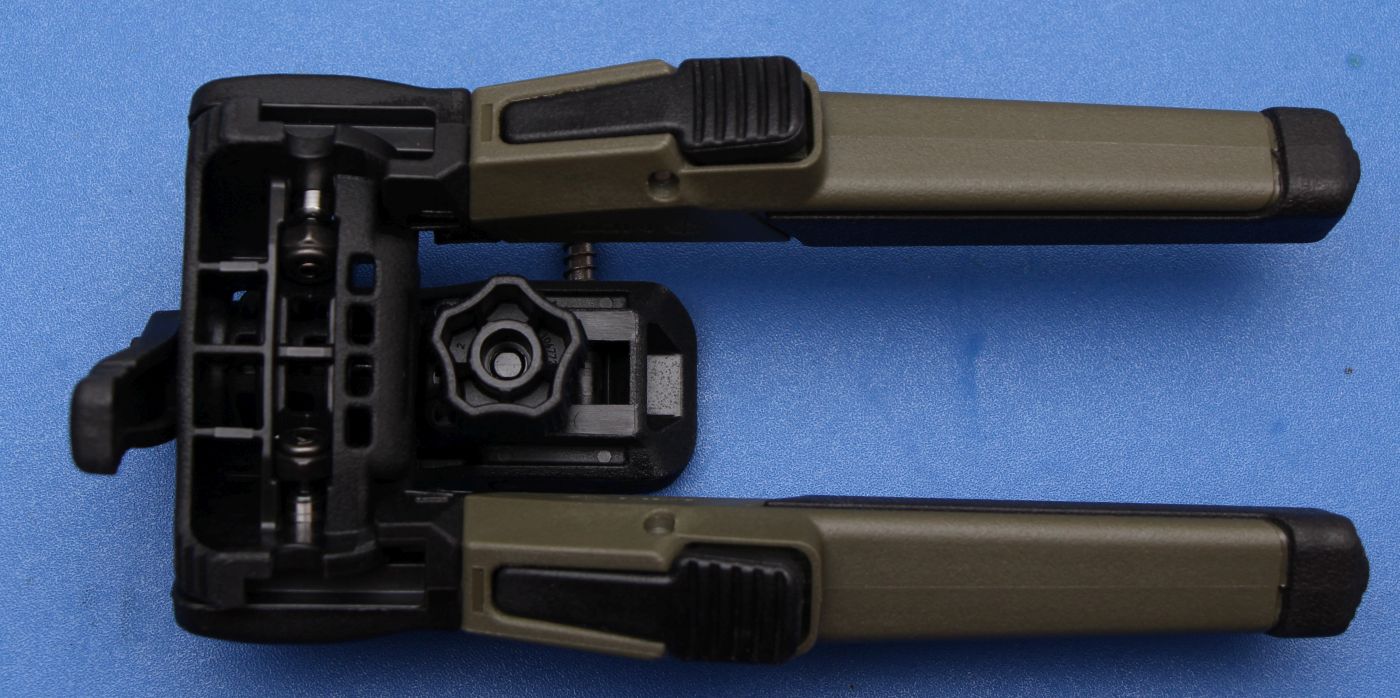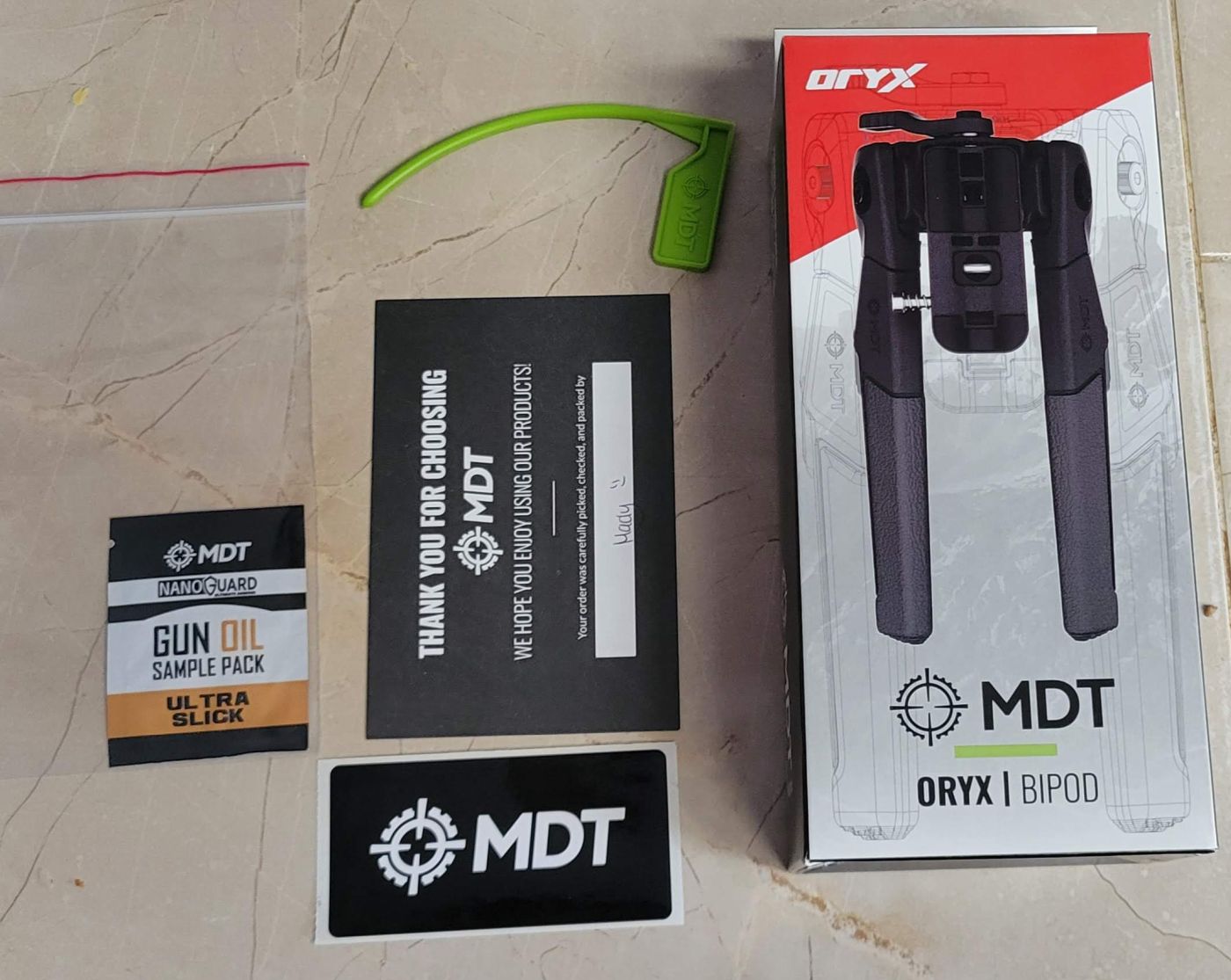
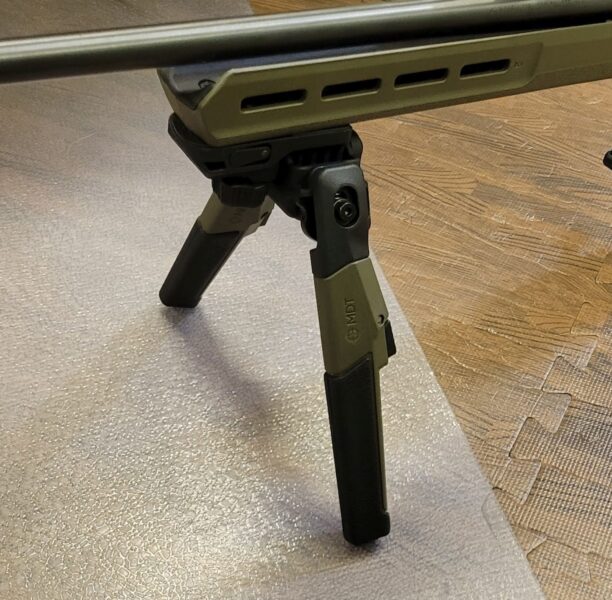
The MDT Oryx Bipod is a lightweight, polymer-based support system designed for quick deployment. When I recently reviewed the Magpul MOE Bipod, people told me that I had to review the MDT Oryx bipod so I asked MDT to send me one for review. I’m glad I got my hands on it because it seems slightly better and cheaper than the Magpul version.
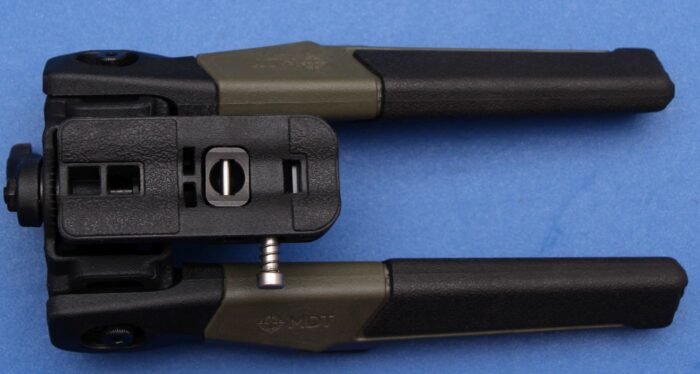
Specifications
- Material: High-strength polymer blend with steel internals.
- Weight: Approximately 12.5 oz or 354 grams(Sling Stud version), less for the mlok version
- Height: 7.2″ to 10″.
- Colours: Comes in different accent colours to match your rifle. This one is in ODG.
- Cant: 50° total.
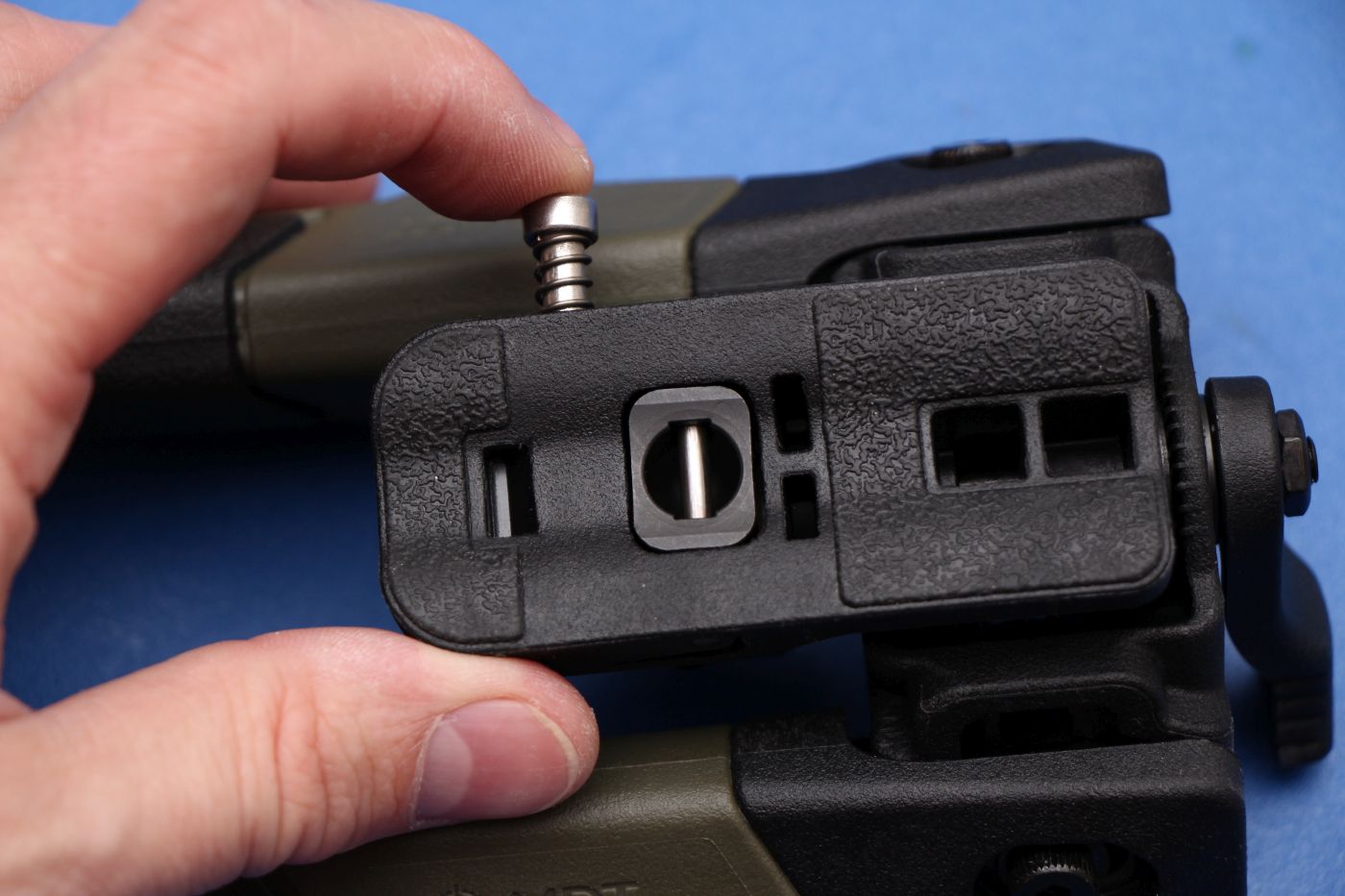
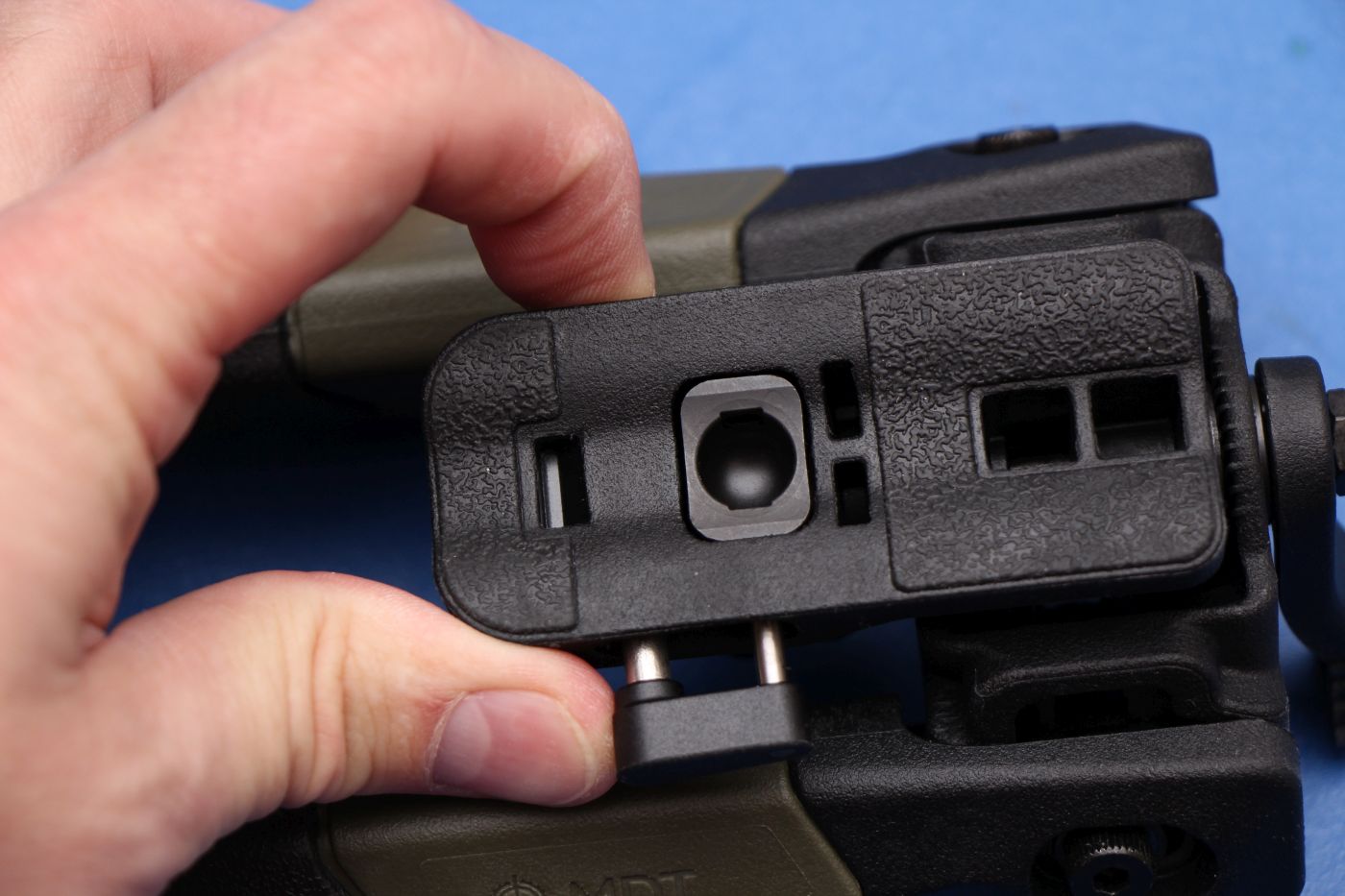
- Attachment: Sling Swivel Stud or M-LOK.
Usability: Hunting and The Range
The “Cam adjustment” (cant) is standard on the Oryx, and in my opinion, it’s the only way to fly. If you’re hunting in the Rockies or even just shooting on a slightly sloped range, you need to be able to level your reticle without fiddling with individual leg heights.
- One-Handed Operation: The Oryx allows you to deploy the legs and adjust the cant tension with one hand. This is critical when you’re trying to keep your eyes on a buck while getting your rifle steady or when you’re fiddling with leveling the rifle at a range with non-level shooting benches.
- The Feet: The rubber feet have a aggressive, cleat-like texture. They grab onto dirt and wood much better than the smoother rubber found on many budget bipods.
Comparison: MDT Oryx vs Harris-Style Bipods
While the Harris is legendary, it’s a product of its time. Here is how the modern Oryx compares:
- Deployment Speed: Harris bipods use external springs that “snap” the legs out. It’s loud and can pinch your fingers if you aren’t careful. The Oryx uses a much quieter, smoother internal mechanism that won’t spook game when you’re setting up a shot in a quiet valley.
- The “Clutter” Factor: A Harris bipod is a mess of exposed springs and adjustment knobs that love to snag on brush, tall grass, and even the inside of your soft gun case. The Oryx is sleek and “snag-free,” with almost all the moving parts tucked inside the polymer housing.
- Cant Adjustment: To get a “Swivel” (cant) feature on a Harris, you have to specifically buy the “S” models, which usually jump up in price and add bulk. The Oryx includes 50° of built-in cant adjustment as a standard feature, and the tension is much easier to tune with a single hand while you’re behind the glass.
- Leg Notches: Most hunting-grade Harris bipods use a spring-loaded leg extension that can be jumpy. The Oryx legs extend with a deliberate, tactile feel that stays put once you set your height.
The Verdict: If you’re building a “retro” rifle or want something purely made of steel and springs, the Harris is fine. But for a modern hunting rig where weight, noise, and snag-reduction matter, the Oryx makes the Harris feel like a tool from a different century.
Comparison: MDT Oryx vs. Magpul Bipod
This is the real question: Why buy the MDT over the Magpul?
The MDT Oryx uses a faster sling stud attachment that I found much easier to swap between rifles in a hurry.
Value: At $149 CAD, the Oryx is significantly cheaper than the $189-219 Magpul Sling Stud QD. You’re saving $70—essentially the price of a couple of boxes of ammo—without sacrificing the features that actually matter in the field. If you don’t want cant in your bipod, you can get the cheaper Magpul MOE for around $129 (but I think the cant+improved mount are worth it for the Oryx)
Aftermarket and Potential Modifications
The Oryx doesn’t have a sling stud on the bottom so you lose 1 sling stud by using this bipod. Some guns come with 2 sling studs but if yours doesn’t, you lose your ability to use a sling.
Conclusion
If you want a lightweight, durable bipod that won’t break the bank, the MDT Oryx is the new king of the hill. It’s faster to attach than the Magpul, comes standard with the cant adjustment every hunter needs, and leaves enough money in your pocket for a tank of gas to get to the trailhead.